The U.S. Congress: A Very Short Introduction (Very Short Introductions) by Donald A. Ritchie
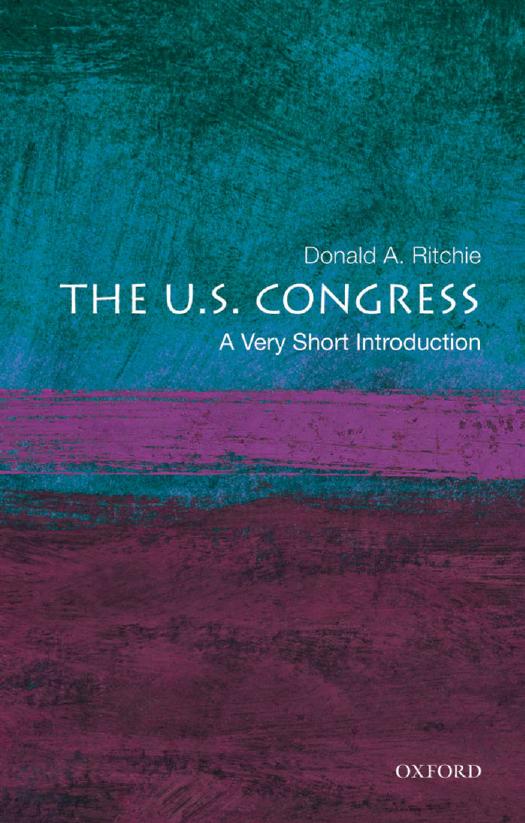
Author:Donald A. Ritchie [Ritchie, Donald A.]
Language: eng
Format: epub, pdf, mobi
Publisher: Oxford University Press
Published: 2010-05-30T16:00:00+00:00
Minority muscle in the Senate
Representatives who get elected to the Senate need to forget most of what they learned about the rules of the House, since the two operate so differently. There is little compulsion in the Senate, whose schedule and procedures are whatever the leadership can work out. The Senate is more courtly and deliberate in its pace of business, and more accommodating of each of its members, doing the bulk of its business by unanimous consent. That means that a single member can hold up business in the Senate, making it a personality-driven institution. House leaders frequently call on their Senate counterparts to show some backbone and stand up to the opposition, but Senate leaders respond that they simply do not have the same legislative and procedural strength and power as the House.
The Senate requires a quorum of 51 percent of its members in order to do business, but there are usually few senators on the floor, except during a vote. A quorum is always assumed to be present, unless a senator calls attention to the absence of a quorum as a delaying tactic. A majority is then needed to establish a quorum so the proceedings can continue. Bells are rung to summon the senators to answer the roll. On occasion, senators have deliberately avoided going to the chamber in order, to keep the majority from acting. The majority leader can then instruct the sergeant at arms to “arrest” the absent members and escort them to the chamber, even carry them in physically. Most of the time, however, quorum calls are simply a device to keep the chamber in session while a compromise amendment is being drafted in the cloakrooms, or when the next scheduled speaker is late arriving, a procedure that is less cumbersome than a formal recess.
Senators sit at assigned desks in the chamber. Each morning a squad of high-school-age pages neatly stack on each senator’s desk the previous day’s Congressional Record and the most recent executive calendar (listing upcoming nominations and treaties) and legislative calendar (the “Calendar of Business” that lists pending bills and resolutions), along with bills to be debated that day or the conference report. This neatness can be deceiving, since the proceedings will be anything but orderly. The Senate passes hundreds of bills over the year but debates only a few dozen of them. The vast majority of bills and resolutions pass by unanimous consent agreements or voice votes, without protracted debate and roll calls. Agreements are worked out in the committees and cloakrooms, narrowing the areas of contention requiring floor fights. But many votes will still be held, requiring the party leaders to stay close by at all times. Senator Mitch McConnell (R-Kentucky), who served as whip and floor leader, emphasized the importance of spending time on the floor and being there when “you’ve got a tough, close vote.” Among the senators filing into the chamber, some of them may be urged to vote one way by their staffs but will remain open to reason from their party leaders.
Download
The U.S. Congress: A Very Short Introduction (Very Short Introductions) by Donald A. Ritchie.pdf
The U.S. Congress: A Very Short Introduction (Very Short Introductions) by Donald A. Ritchie.mobi
This site does not store any files on its server. We only index and link to content provided by other sites. Please contact the content providers to delete copyright contents if any and email us, we'll remove relevant links or contents immediately.
The Secret History by Donna Tartt(18962)
The Social Justice Warrior Handbook by Lisa De Pasquale(12171)
Thirteen Reasons Why by Jay Asher(8854)
This Is How You Lose Her by Junot Diaz(6842)
Weapons of Math Destruction by Cathy O'Neil(6222)
Zero to One by Peter Thiel(5738)
Beartown by Fredrik Backman(5687)
The Myth of the Strong Leader by Archie Brown(5469)
The Fire Next Time by James Baldwin(5392)
How Democracies Die by Steven Levitsky & Daniel Ziblatt(5180)
Promise Me, Dad by Joe Biden(5118)
Stone's Rules by Roger Stone(5058)
A Higher Loyalty: Truth, Lies, and Leadership by James Comey(4914)
100 Deadly Skills by Clint Emerson(4888)
Rise and Kill First by Ronen Bergman(4743)
Secrecy World by Jake Bernstein(4708)
The David Icke Guide to the Global Conspiracy (and how to end it) by David Icke(4662)
The Farm by Tom Rob Smith(4474)
The Doomsday Machine by Daniel Ellsberg(4460)
